Singapore’s construction sector is moving towards advanced technological solutions in piling and foundation works, as well as formwork applications, to improve safety and productivity and address critical industry challenges.
The Advanced Construction Technology Exchange, organised by the Building and Construction Authority (BCA) on 20 March 2026 at the BCA Academy Braddell Campus, showcased a range of innovations designed to help deliver projects faster, safer and more reliably.
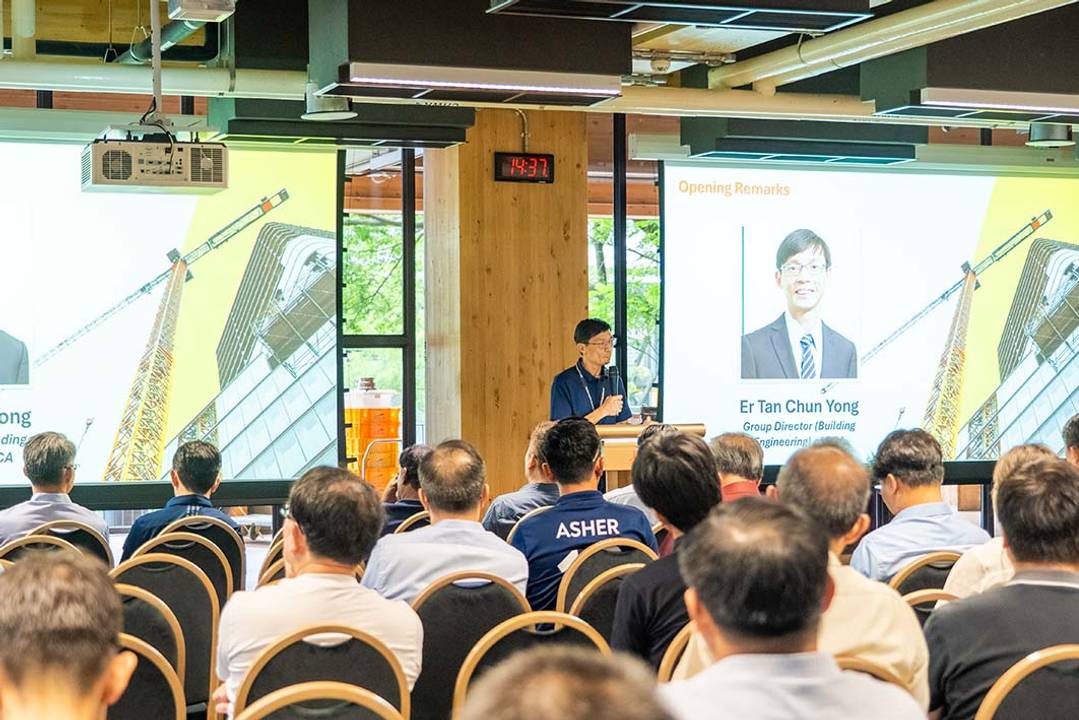
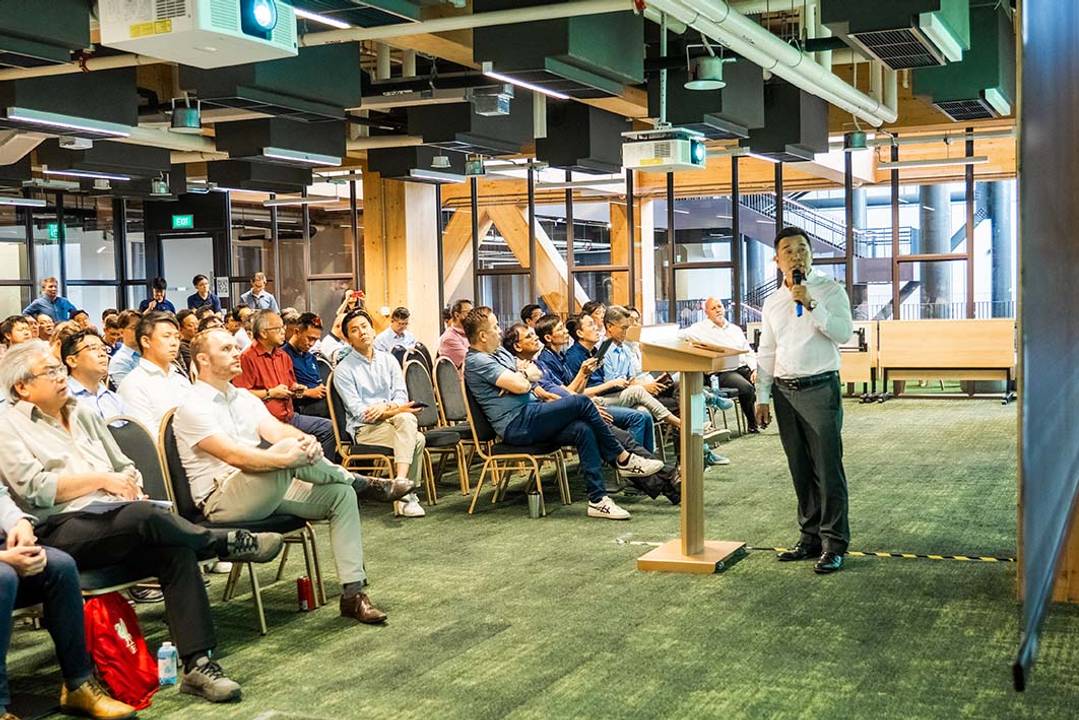
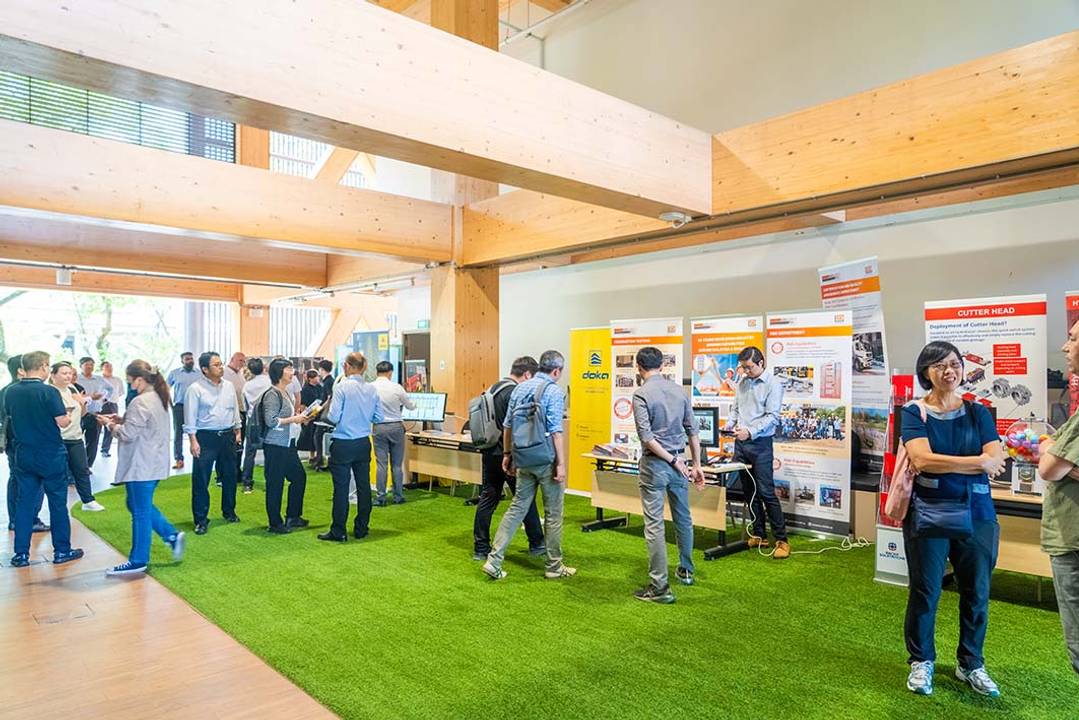
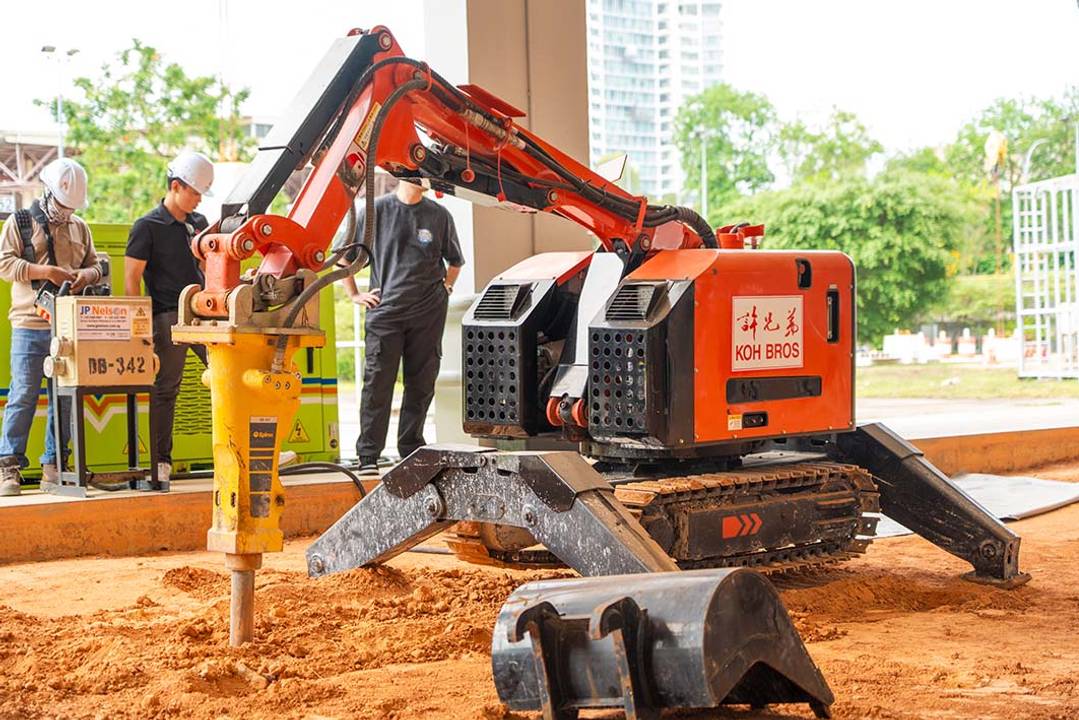
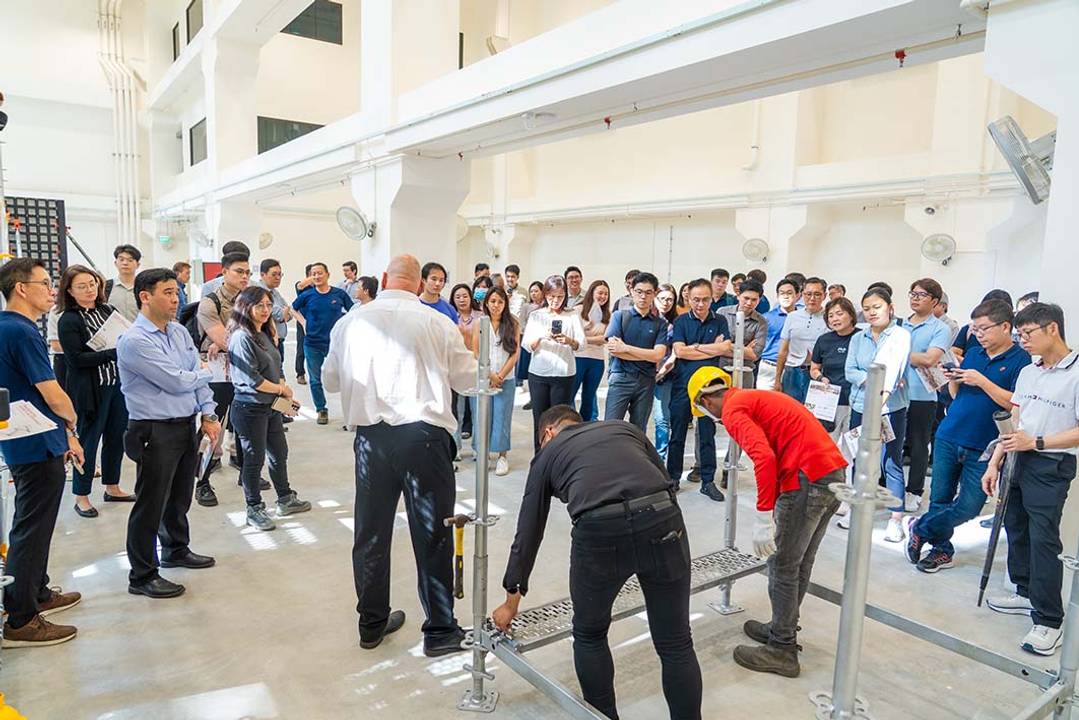
In his opening remarks, Er Tan Chun Yong, group director of building engineering at BCA, stressed the importance of productive and safe construction practices. The event featured presentations from industry stakeholders and a product exhibition area, along with live demonstrations of Peri’s formwork and scaffold systems and Biscuit Robotics’ demolition robot. [Scroll down for more photos and short clips of live demos.]
Modern pile testing
Chan Soon Kong, chief operating officer of Asia Piling, a specialist foundation contractor, spoke on optimising bored piling works through modern load testing methods, namely the Rapid Load Test (RLT) – StatRapid and Statnamic – and the Bi-Directional Static Load Test (BDSLT).
Modern load testing provides higher performance and safety standards, delivering more reliable results, faster execution and improved safety. “It is ideal for dense environments like Singapore, where space and logistics are critical,” said Mr Chan, adding that RLT and BDSLT can be carried out more quickly with less manpower. Conventional bored pile load tests, in contrast, are “slow, costly and risky.”
He explained that modern load testing offers a higher load capacity (via BDSLT), allowing much greater loads to be applied without the logistical demands of transporting and stacking thousands of tonnes of kentledge, and improves productivity through faster set-up, shorter testing cycles and quicker dismantling, helping to meet tight project schedules.
It can handle loads exceeding 10,000 t while requiring only a small footprint on-site. Other benefits include its adaptability, making it effective even in challenging terrain; reduced environmental impact due to minimised material handling and disruption; and greater accuracy and reliability, thanks to its superior data quality.
Mr Chan also outlined key considerations for implementation, including practical challenges such as the need for specialised equipment (calibrated hydraulic jacks/load cells) and trained personnel, as well as the careful interpretation of results, with engineers required to be proficient in analysing both BDSLT and RLT outputs to avoid misjudging pile capacity.
Singapore has formally adopted BDSLT through national standards (TR 63:2018), and the test is increasingly used in major projects for bored piles and barrette piles, shared Mr Chan. The RLT test has also been adopted locally for foundation piles, with BCA issuing guidelines in 2016 and 2021 to support industry use.
“StatRapid [RLT] is now widely recognised as a faster, safer and more cost-efficient alternative to traditional static load tests,” Mr Chan pointed out. “However, stakeholders must weigh compliance, technical expertise and data interpretation when deploying it.”
Gilbert Chuah, general manager of Geonamics (S) Pte Ltd, a geotechnical testing, inspection and certification services provider, and Dr Chew Soon Hoe, assistant professor at the National University of Singapore (NUS), gave an overview of innovative and technically sound pile testing technologies.
“We are in an exciting period for the industry, driven by rapid advances in technology, including IoT, digitalisation and AI; significant developments over the past five years, even in specialised fields such as pile testing; and strong support from BCA in R&D and technology adoption, while maintaining technical rigour,” said Mr Chuah.
During the presentation, Mr Chuah elaborated on RLT, Distributed Fibre Optic Sensing (DFOS) for pile testing instrumentation, and the Thermal Integrity Profiler (TIP).
According to Mr Chuah, compared to conventional methods, RLT adoption can save around 96-112 man-days on average per test and carries a lower risk of equipment setup tilting or collapsing. TIP can save around 12-18 man-days, while DFOS can save around two man-days per pile.
The DFOS method is easier to manage on-site, contributing to safer operations. TIP eliminates the need to install access tubes for cross-hole sonic logging, thus avoiding the risk of finger injuries.
Dr Chew mentioned that the RLT test has been applied in major projects worldwide, such as the Taipei 101 building (Taiwan), the KL118 building (Malaysia), the RTS Pier (part of the Johor Bahru–Singapore RTS project), and numerous HDB developments in Singapore, among others. The Statnamic method, in particular, has been commonly used in Malaysia, Japan, Taiwan and Australia.
DFOS enables long-term monitoring (in years) of pile integrity, said Dr Chew, and offers more data than conventional strain gauges, allowing engineers to make better judgements. Meanwhile, TIP enables monitoring of pile performance throughout the construction process, ensuring quality assurance without impacting site productivity.
Intelligent machines and formwork innovations
Owen Williams, VP Asia at Xpanner, talked about the role of machine control and automation in boosting productivity and safety on construction sites.
Xpanner automation solutions help create more intelligent machines that can perform complex tasks autonomously, safely and efficiently. The systems are suitable for pile driving, material handling and earthworks applications.
For instance, the traditional solar pile construction process requires pre-construction work – surveying, marking pile locations and setting pile heights – prior to pile driving and quality control. With Xpanner, these pre-construction steps can be eliminated.
Mr Williams shared that Halex Construction in Singapore, one of Xpanner’s partners, has integrated machine guidance technology into its heavy equipment. This has resulted in a number of benefits, from reduced manpower to digital workflows, as well as time and cost savings and enhanced operator confidence. “By eliminating certain workflows and improving time and overall costs, the company has improved its daily operational efficiency by 20%,” he noted.
“We envision a future where construction machinery operates with precision and autonomy, powered by physical Al. Our mission is to bridge the physical and digital worlds by embedding intelligent systems into heavy equipment, starting with retrofit kits like the X1 that can sense, decide and act,” said Mr Williams. “Ultimately, we’re building the foundation for fully autonomous construction.”
Andrew McCluskey, head of marketing (Asia Pacific) at Peri, spotlighted advanced formwork and scaffold technologies, including the Duo panel system formwork, Peri Up access scaffold, VSC access scaffold and Peri concrete sensors, among others.
He explained how Peri systems, designed for high productivity, deliver “labour efficiency, time savings and the highest safety standards,” all of which can lead to long-term cost savings. He also presented examples of projects in Singapore that have deployed Peri systems.
Liu Jianzhong, general manager of Chian Teck Realty Pte Ltd, a Singapore-based contractor, highlighted the benefits of system formwork in building projects. “Advanced system formwork for cast-in-situ works increases productivity and reduces manpower,” he said.
“It enables structured productivity management with measurable outcomes, while enhancing safety, quality and programme certainty,” he added. “System formwork represents a shift from labour-intensive construction to engineered productivity systems.”
Mr Liu also shared efficient formwork solutions used by Chian Teck Realty, such as the Peri Vario system and the Peri engineered column system, which achieved up to a 50% reduction in cycle time and cut manpower requirements from six to three workers.
Another solution is the Doka Lubeca ACS formwork system, which has been deployed on Singapore’s Keppel Tower project, enabling core wall construction rates of up to five floors per month.
Mr Liu said change is necessary amid rising safety and quality expectations, pointing out that “labour constraints are structural, not temporary” and that “productivity must be measurable, not assumed.”
All images: War Studio (via BCA)