Contractor PT Wijaya Karya (Persero) Tbk (Wika) is currently undertaking the construction of Patimban Port in Subang Regency, West Java Province, Indonesia. The project is now over 80% complete, with reclamation and pavement works ongoing as part of the main infrastructure. It is expected to be completed in October 2026.
Patimban Port is designed as a strategic logistics hub integrated with key industrial areas in West Java, such as Karawang and Subang. Upon completion, it will help ease congestion at the existing Tanjung Priok Port.
According to Wika, silt curtains were used during dredging to minimise sediment distribution and maintain water quality around the project area. The contractor also adopted cement deep mixing (CDM) technology for soil improvement to enhance the stability of the port structure. This soil improvement method increases the infrastructure’s resistance to heavy loads and abrasion, particularly in soft soil conditions.
In addition, Wika has implemented occupational safety and health (OSH) standards across all stages of the project to support the team’s zero-accident target. Environmental management is achieved through environment-friendly construction technologies, sedimentation control and systematic waste management, in line with sustainable development principles.
The Patimban Port project plays a role in creating a new centre of economic growth in the northern corridor of Java Island and strengthening Indonesia’s position as a global maritime axis by providing international-standard port infrastructure.
Patimban Port Access Toll Road
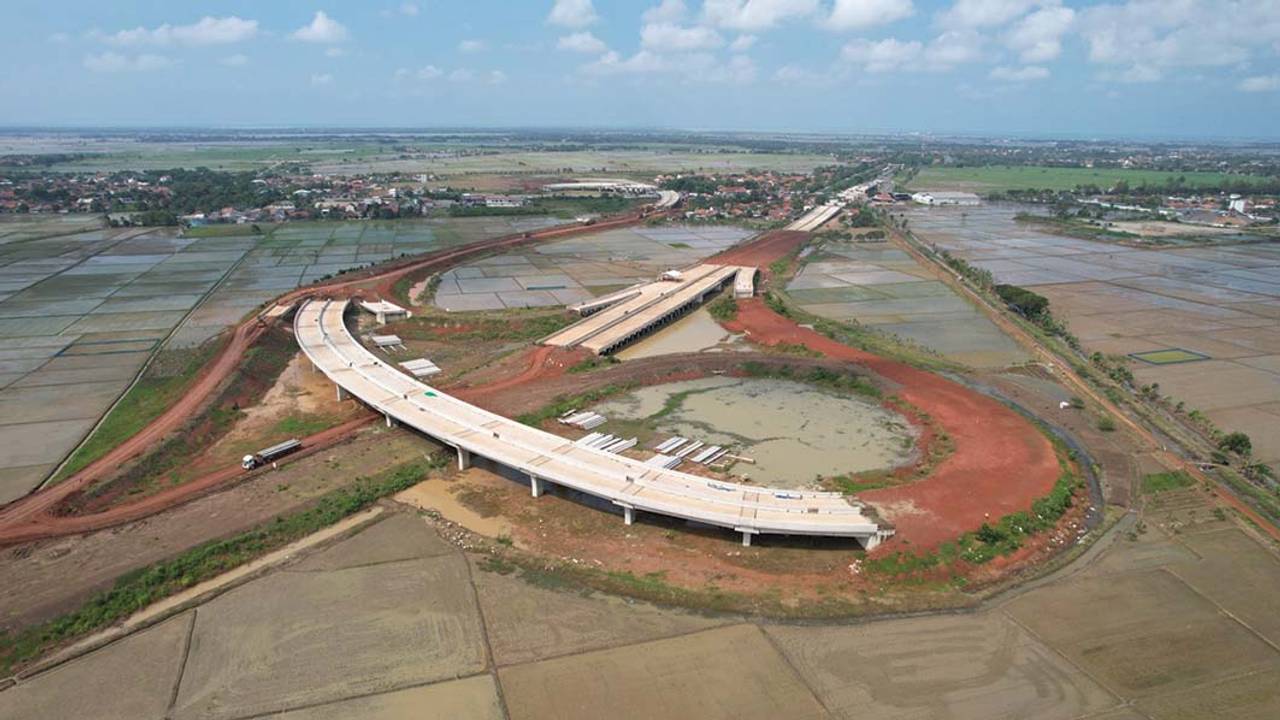
Through the Wika-Adhi joint operation, Wika is also constructing the Patimban Access Toll Road. To date, the project’s progress has reached over 65%, and it is scheduled for completion by 31 March 2027. This new road aims to improve connectivity between Patimban Port, nearby industrial areas, and the national road network.
Wika said it has employed several innovative methods during construction, especially for Package 4 of the project. One of these is hydraulic static pile driving (HSPD) for spun pile installation on narrow plots near densely populated residential areas. This technique significantly reduces noise, vibration and the risk of damage to surrounding buildings.
OHS standards and a risk-based safety monitoring system were also applied across all stages of construction. Furthermore, the project prioritises environmental impact management, construction waste management, and community empowerment through the employment of local labour.
All images: Wika