MTR Corporation is advancing multiple new railway projects at full speed in support of Hong Kong’s future development blueprint. In particular, Hung Shui Kiu station on the Tuen Ma Line is set to reach a major milestone.
Prefabricated components of the station structures will be assembled at the jobsite and then precisely skidded into their designated positions and inserted into the operating Tuen Ma Line viaduct. According to MTR, this method is being used for the first time in the world to insert station structures into an operating railway viaduct.
‘Build first, skid later’
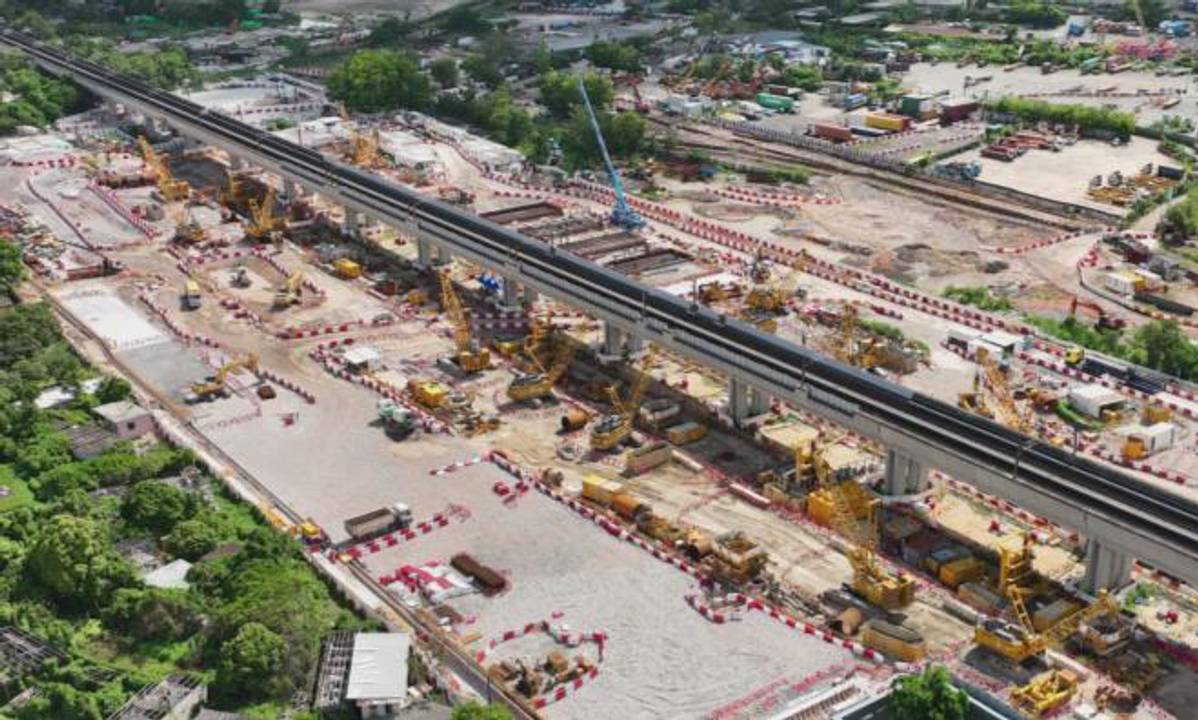
Located between Tin Shui Wai and Siu Hong stations on the Tuen Ma Line, Hung Shui Kiu station will primarily serve the future Hung Shui Kiu/Ha Tsuen New Development Area. Since construction commenced in 2024, MTR has undertaken meticulous planning for the works to be carried out on the operating railway. The corporation has adopted a ‘build first, skid later’ approach for the construction of station structures. This approach overcomes the constraints of conducting works on the railway viaduct only during the ‘golden two hours’ of non-traffic hours.
The station’s main structures, which will be inserted into position using the skidding construction method, will be divided into two sections located on either side of the operational Tuen Ma Line viaduct, serving the uptrack towards Tuen Mun and the downtrack towards Wu Kai Sha, respectively. Each of the main structures will be 210 m long, 15 m wide and weigh approximately 10,000 t.
Upon completion of assembly at the jobsite next to the Tuen Ma Line viaduct, MTR plans to commence skidding works in phases using a large-scale hydraulic jacking system. The two sections will be precisely skidded, inserted alongside the operating viaduct, and secured to form the complete station structures.
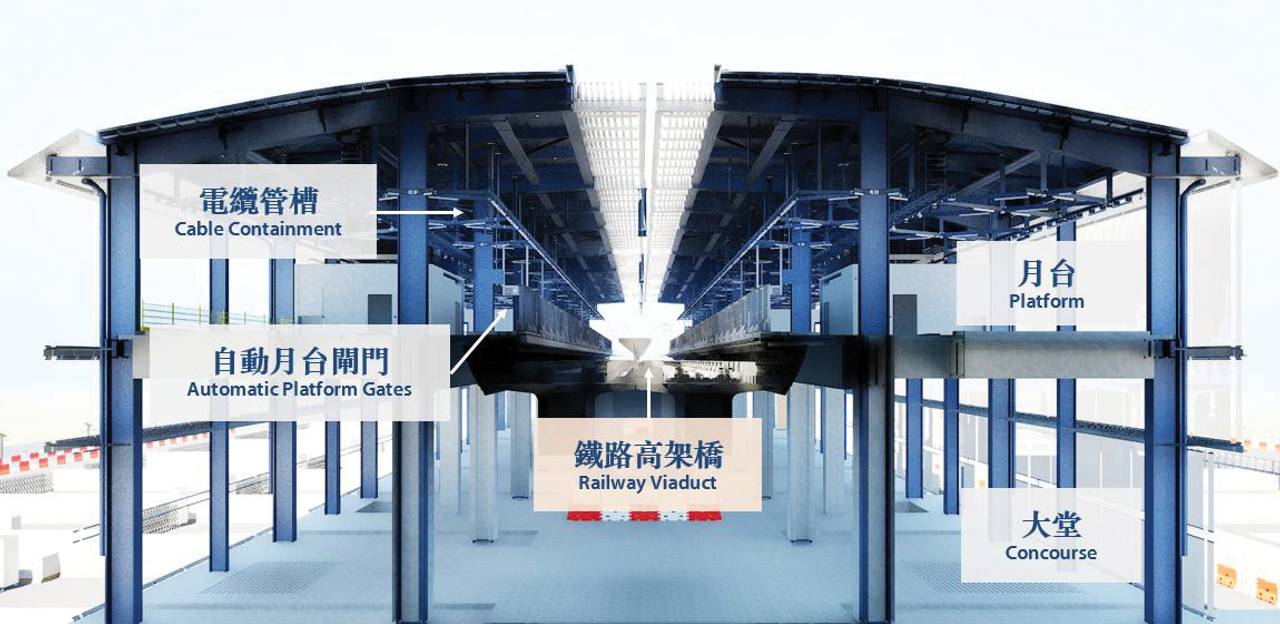
MTR said this will be the world’s first and largest heavy rail station constructed on an operating railway viaduct using the skidding construction method. In addition to the major station civil structures – including the ground-level concourse, upper-level platforms and rooftop structure – the assembled station structures will also incorporate major electrical and mechanical (E&M) and building services installations, including cable containment systems and automatic platform gates (APGs).
Following completion of the skidding works, a series of subsequent works will commence, with the overall Hung Shui Kiu station project scheduled for completion in 2030.
The construction of Hung Shui Kiu station is massive in scale and highly complex. MTR plans to undertake the skidding of the station structures alongside the downtrack of the Tuen Ma Line in the first quarter of next year, while skidding along the uptrack, which is on the opposite side, is scheduled for the third quarter of next year.
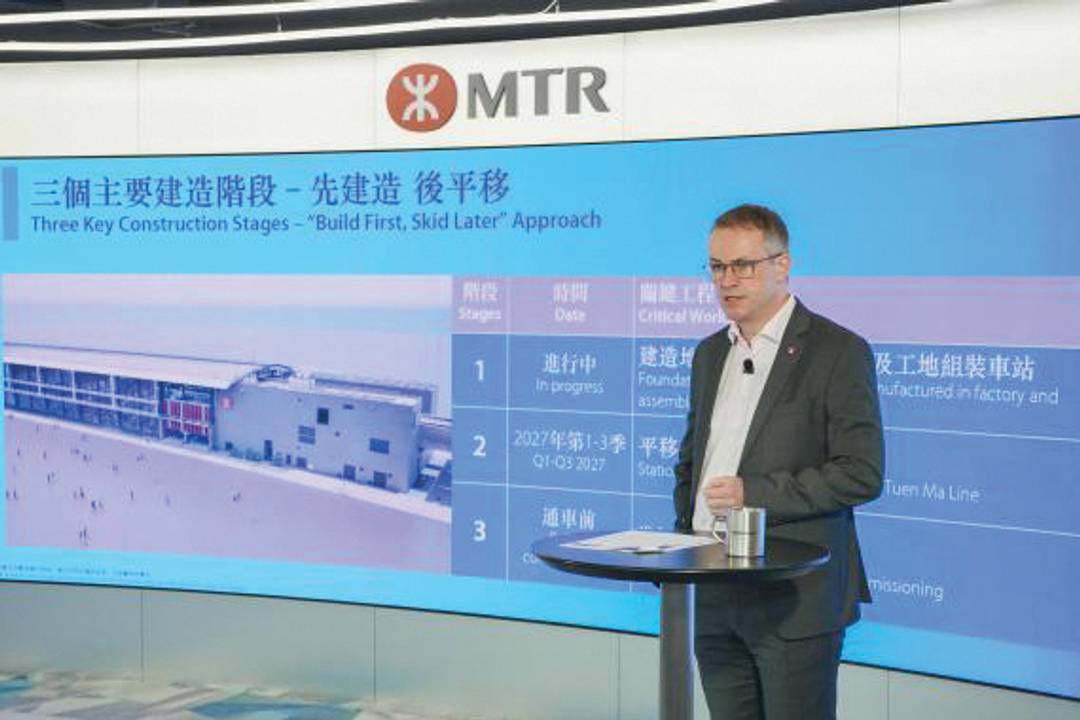
Carl Devlin, capital works director of MTR Corporation, shared that a series of advance works, including the removal of parapet walls and the modification of overlapping sections of the overhead line along the viaduct, had been completed over the past two years. The station construction has now entered a critical stage.
“Our project team breaks through the traditional mindset of railway construction to overcome the constraints of building a new station on the operating line, and decides to adopt a skidding method for the construction of Hung Shui Kiu station. It requires comprehensive and meticulous planning to ensure precise movement of the massive structures and insertion into the viaduct and seamless connection to various railway systems,” explained Mr Devlin.
“The station components are now being progressively delivered to the site for assembly. The team is working extensively on the construction details and arrangements, as well as to carry out testing and trials, and making every effort to ensure readiness for this mega skidding.”
Based on current progress, as the skidding works get underway, the station structures on one side will be gradually skidded from a position approximately 30 m away towards the viaduct. The final and most critical stage will be the insertion of the station structures into the Tuen Ma Line.
After the new station structures are inserted into the operating Tuen Ma Line, the project team will immediately perform critical works, including the installation of overhead lines and modifications to related railway facilities, to ensure seamless integration and enable continued train operations.
MTR pointed out that these final connection works for both station structures will be highly complex and time-consuming, requiring continuous execution that extends into daytime operating hours. At this stage, services at a few stations on the Tuen Ma Line are expected to be affected when the skidding-related procedures on the two sides of the viaduct are carried out in the first and third quarters of next year, respectively.
Mr Devlin added, “This innovative construction method significantly reduces the need for works during non-traffic hours, greatly reduces construction risks and secures project progress. However, service adjustments are required and inevitable for adopting this method. Drawing on our experience from previous railway projects, we will undertake careful planning and do our utmost to minimise the impact on passengers.”
All images: MTR Corporation